
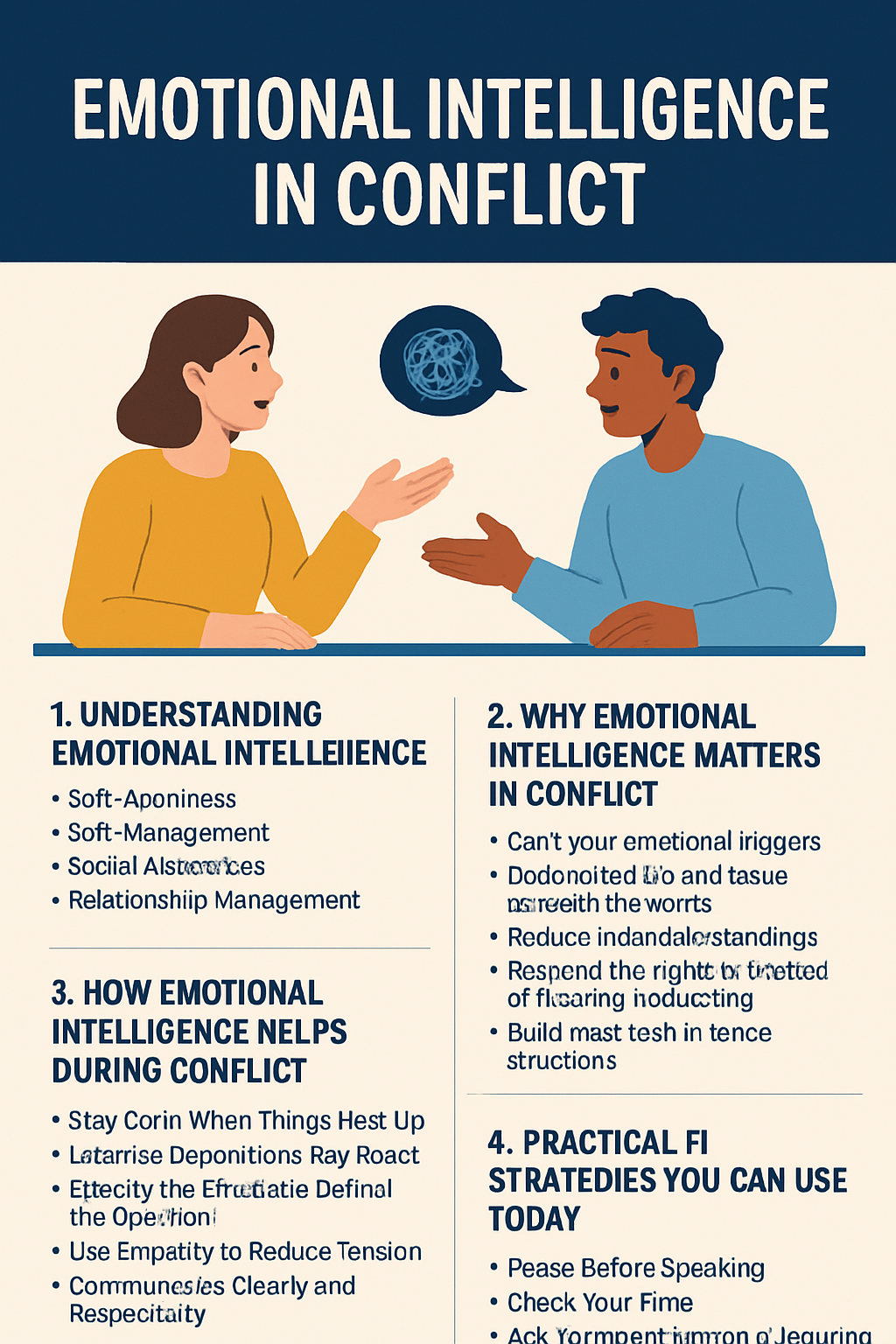
Emotional Intelligence is the ability to understand, manage, and respond to emotions—both your own and others’. When applied to conflict, EI becomes a powerful tool that turns tension into understanding and disagreement into growth.
1. Understanding Emotional Intelligence
Emotional Intelligence involves four core skills:
1. Self-Awareness
Noticing your emotions without letting them control you.
2. Self-Management
Managing reactions and staying calm under pressure.
3. Social Awareness
Understanding how the other person feels and what they may be experiencing.
4. Relationship Management
Using empathy, communication, and trust to resolve issues.
All four skills play a crucial role in resolving conflict constructively.
2. Why Emotional Intelligence Matters in Conflict
Conflict becomes harmful when emotions take over—anger, frustration, ego, or fear. EI helps you:
Calm your emotional triggers
Understand the real issue beneath the words
Reduce misunderstandings
Respond thoughtfully instead of reacting impulsively
Build trust even in tense situations
Instead of escalating arguments, emotionally intelligent people de-escalate them.
3. How Emotional Intelligence Helps During Conflict
✔ Stay Calm When Things Heat Up
People with high EI pause before reacting. They breathe, process, and then respond—preventing the conflict from becoming worse.
✔ Listen to Understand, Not React
Emotionally intelligent individuals focus on what the other person means, not just what they say.
✔ Identify the Emotions Behind the Behavior
Often, conflict is not about the surface issue. It may be about:
Feeling unheard
Feeling disrespected
Fear of losing control
Miscommunication
EI helps you see beyond the argument.
✔ Use Empathy to Reduce Tension
When people feel understood, they are more willing to cooperate. A simple line like,
“I understand why you feel that way,”
can instantly soften a heated moment.
✔ Communicate Clearly and Respectfully
EI encourages non-blaming language such as:
“I feel…”
“I need…”
“Can we find a solution together?”
This shifts the focus from fighting to problem-solving.
4. Practical EI Strategies You Can Use Today
1. Pause Before Speaking
A few seconds of silence can save hours of conflict.
2. Check Your Tone
Sometimes tone causes more damage than words.
3. Ask Questions Instead of Assuming
Try: “Help me understand what you mean.”
4. Notice Your Body Language
Open posture, relaxed hands, and eye contact reduce tension.
5. Validate the Other Person’s Feelings
Validation doesn’t mean agreeing. It means acknowledging their emotions.
5. The Long-Term Benefits of Using EI in Conflicts
🌟 Stronger Relationships
People trust you more when they feel respected.
🌟 Better Workplace Harmony
Teams with emotionally intelligent leaders experience fewer conflicts and higher collaboration.
🌟 Reduced Stress
You handle disagreements calmly instead of carrying emotional weight.
🌟 Better Decision-Making
Clear emotions lead to clearer thinking.
Conclusion
Conflict is inevitable. But emotional intelligence turns conflict into an opportunity—an opportunity to understand better, communicate better, and grow better.
When you learn to manage emotions—not only yours but also the other person’s—you unlock the ability to handle any conflict with confidence, maturity, and grace.